Commercial HVAC Emergency Repairs in San Jose: Warning Signs Property Managers Should Not Ignore
Commercial HVAC emergency repairs in San Jose are often the result of operational issues that have been developing for months. In many commercial and multi-family properties, inconsistent cooling, electrical strain, repeated service calls, and deferred maintenance gradually push HVAC systems toward failure during periods of heavy demand.
For property managers and facility operators, identifying these warning signs early can help reduce downtime, avoid larger repair costs, and improve long-term system reliability.
In commercial and multi-family properties, emergency HVAC failures often affect far more than indoor comfort. Delayed repairs can disrupt operations, increase occupant complaints, and create larger long-term equipment costs.
5 Warning Signs a Commercial HVAC System May Be Approaching Failure
Property managers often encounter recurring warning signs before a major HVAC breakdown occurs. Monitoring these patterns can help identify systems that may require more immediate attention.
1. Repeated Service Calls for the Same Equipment
Frequent repair visits involving the same rooftop unit or HVAC zone often indicate declining reliability. While individual repairs may temporarily restore operation, recurring failures can signal larger mechanical or electrical issues developing within the system.
Repeated service calls often indicate that aging equipment can no longer maintain reliable operational performance.
2. Inconsistent Cooling Across the Property
Uneven temperatures throughout a building can point to airflow restrictions, ductwork problems, failing components, zoning issues, or declining system performance.
In commercial and multi-family environments, inconsistent cooling frequently creates occupant complaints before a full HVAC failure occurs. Addressing these conditions early may help prevent larger operational disruptions later.
3. Electrical Issues or Breaker Trips
Electrical issues are among the more serious warning signs in commercial HVAC systems. Breaker trips, intermittent shutdowns, or power-related interruptions may indicate compressor strain, motor problems, overheating, or failing electrical components.
These conditions can worsen quickly during periods of high cooling demand in San Jose commercial properties.
4. Unusual Operating Noise or Vibration
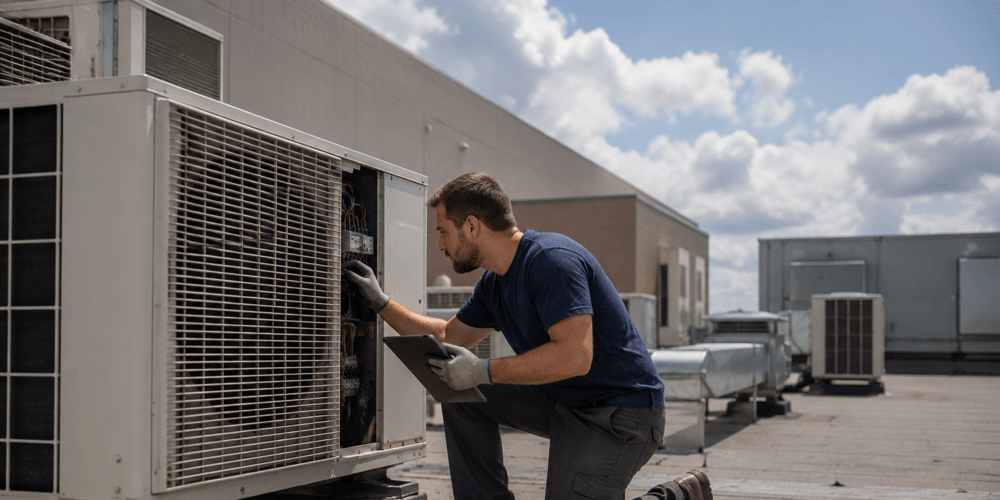
Loud vibration, rattling, grinding, or abnormal operating sounds often indicate mechanical wear inside rooftop units or HVAC equipment.
Loose components, blower assembly issues, worn bearings, and motor deterioration can all contribute to system instability. Ignoring these warning signs may increase the likelihood of unexpected equipment failure.
5. Sudden Energy Usage Increases
Commercial HVAC systems that begin consuming significantly more energy may be operating inefficiently due to airflow restrictions, failing components, refrigerant problems, or excessive runtime.
In many cases, rising energy usage appears before complete system failure occurs. Reviewing utility trends alongside repair history can help property managers identify systems that may require further evaluation.
Why Emergency HVAC Failures Create Larger Problems in Commercial and Multi-Family Buildings
Emergency HVAC failures often extend beyond temperature control issues. In commercial and multi-family environments, downtime can quickly affect operations, occupants, and property performance.
Tenant Complaints and Occupant Disruption
Inconsistent indoor temperatures can create frustration for tenants, employees, and residents. Multi-family properties may experience increased complaints during heat events, while commercial properties may face operational disruptions tied to occupant comfort.
For property managers, repeated HVAC failures can also create longer-term tenant satisfaction concerns.
Business Continuity Risks
Commercial HVAC failures may affect retail spaces, offices, restaurants, medical facilities, and other occupied environments differently depending on operational requirements.
Certain properties rely heavily on stable indoor conditions to maintain daily operations. Emergency failures can increase downtime, interrupt customer-facing operations, and create additional scheduling pressures for management teams.
Deferred Repairs Can Lead to Larger Capital Costs
When systems continue operating under strained conditions, additional components may become affected over time. Compressors, motors, electrical systems, and connected equipment can experience accelerated wear when underlying HVAC problems remain unresolved.
In many commercial properties, recurring emergency repairs eventually lead to retrofit or system replacement discussions.
Why Some Emergency HVAC Calls Lead to Retrofit Discussions
Not every emergency repair situation results in full equipment replacement. However, recurring failures sometimes reveal broader system limitations affecting long-term reliability.
Older Systems Become Increasingly Difficult to Stabilize
As HVAC systems age, parts availability, efficiency concerns, and repeated repair cycles can create ongoing operational challenges.
Older rooftop equipment may continue requiring repairs while struggling to maintain consistent building performance.
Emergency Repairs Sometimes Reveal Larger System Limitations
Some commercial properties experience recurring HVAC issues because the existing HVAC infrastructure no longer aligns with current occupancy demands or operational requirements.
Poor airflow design, aging ductwork, undersized equipment, and outdated zoning strategies can all contribute to repeated service problems over time.
Strategic Upgrades May Reduce Future Emergency Calls
In some cases, commercial HVAC retrofits and targeted system upgrades may help reduce long-term emergency repair frequency while improving operational stability.
Commercial HVAC planning for San Jose properties often focuses on balancing repair costs, equipment lifespan, efficiency goals, and ongoing property performance requirements.
How Commercial Property Managers in San Jose Can Reduce Emergency HVAC Risks
Reducing emergency HVAC issues typically requires a combination of maintenance planning, operational monitoring, and long-term system evaluation.
Monitor Patterns Instead of Isolated Incidents
Recurring tenant complaints, repeated repair visits, airflow inconsistencies, and unstable temperatures often provide early indicators of larger HVAC problems developing within a property.
Tracking these patterns over time can help property managers identify systems that may require closer evaluation.
Prioritize Preventative Maintenance
Routine HVAC maintenance may help identify developing issues before they become larger operational failures within the property.
Commercial maintenance programs commonly include inspections, coil cleaning, drain line cleaning, electrical testing, filter replacement, and overall system performance evaluations.
Plan Ahead for Aging HVAC Equipment
Long-term planning can help commercial and multi-family properties reduce unexpected HVAC emergencies.
Evaluating equipment age, repair frequency, operational efficiency, and overall system condition may help property managers make more informed decisions regarding repairs, upgrades, or future replacement planning.
Commercial HVAC Emergency Support for San Jose and Santa Clara Properties
Commercial and multi-family HVAC systems often show warning signs before major failures occur. Repeated repairs, unstable temperatures, electrical issues, and rising operating costs can all indicate larger system reliability concerns developing within a property.
Aquinas HVAC provides commercial emergency HVAC repairs, maintenance programs, retrofit support, and long-term HVAC planning for commercial and multi-family properties throughout San Jose and the surrounding Santa Clara region.