Preparing Commercial HVAC Systems for Winter in San Diego
San Diego’s mild winters can make heating preparation easy to postpone. Commercial properties may still be running air conditioning well into fall, while heating equipment receives little or no use for months at a time.
For property managers and facility managers, fall is the time to review how equipment performed during the cooling season, verify heating operation, review controls and scheduling, and address known issues before occupants begin relying on heat.
Aquinas HVAC provides commercial HVAC services including maintenance, heating, repairs, upgrades, and installation for office buildings, retail centers, mixed-use properties, and other light-commercial facilities. Its commercial focus includes reducing downtime, improving reliability, and identifying problems before they lead to larger repairs or failures.
Why Heating Problems Can Go Unnoticed in San Diego
In colder climates, heating equipment may operate for months at a time. San Diego is different. Many commercial buildings use heating intermittently, and some systems may go long periods without significant heating demand.
That can allow problems to remain hidden.
A packaged rooftop unit, heat pump, furnace, or other commercial system may cool the building normally while still having a problem on the heating side. Controls may not transition properly between modes and airflow issues may become more noticeable once heating begins.
The first sustained period of cold weather is often when these issues show up. By then, a minor problem can quickly become a tenant comfort issue or an urgent service call.
Use Cooling-Season Performance as a Starting Point
Winter preparation should begin with what the system has already shown during the cooling season.
Recent record-setting heat in San Diego placed sustained demand on commercial cooling equipment. Systems that required emergency repairs, repeated service calls, or unusually long runtimes during hot weather may deserve closer attention before operating conditions change.
An emergency repair should not automatically be treated as a seasonal inspection of the entire HVAC system. The immediate goal is usually to diagnose the failure and restore operation.
Property managers should also review unresolved recommendations or deferred work from prior visits, since a successful cooling repair does not necessarily confirm that heating, controls, airflow, drainage, or other components are ready for winter.
Useful indicators include:
- Equipment that struggled during periods of high demand
- Recurring thermostat or control problems
- Uneven airflow between areas of the building
- Units that required repeated repairs
- Deferred work from earlier service visits
- Equipment that is becoming less reliable as it ages
Recurring problems or unresolved recommendations may also indicate that the equipment needs additional HVAC service before winter.
Verify Heating Operation Before It Is Needed
Commercial heating equipment should be tested before occupants depend on it.
The objective is to confirm that the system operates normally through a complete heating cycle and that controls respond correctly to changes in demand.
Depending on the equipment installed at the property, a seasonal inspection may include checking system operation, controls, electrical components, airflow, and filters.
Property managers should watch for:
- Delayed or inconsistent startup
- Units that do not respond to thermostat commands
- Unusual noises during heating operation
- Persistent odors after startup
- Weak or inconsistent airflow
- Areas that do not reach the expected temperature
- Excessive cycling
- Existing repair issues that remain unresolved
Aquinas provides commercial and multi-family heating services that include repair, replacement, and seasonal maintenance.
Testing systems early gives property managers time to correct problems before colder mornings create a more immediate demand for heat.
Pay Attention to Rooftop and Weather-Exposed Equipment
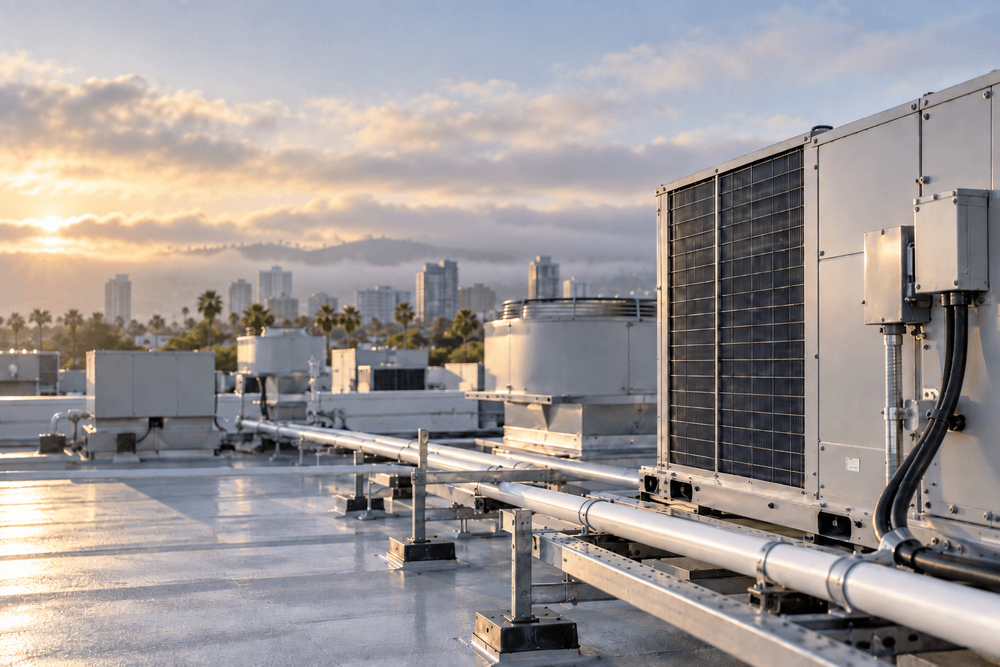
Many San Diego commercial properties rely on rooftop HVAC equipment. These systems remain exposed to sun, moisture, wind, and, in some locations, coastal conditions throughout the year.
Winter preparation should include a review of the physical condition of this equipment. Service personnel should look for damaged panels, deterioration around electrical components, corrosion, and drainage or condensate issues that may become more significant when winter rain arrives.
Properties closer to the coast may require additional attention because salt air and moisture can accelerate corrosion. Winter preparation should account for that exposure without assuming every San Diego property faces the same conditions.
Controls and Scheduling Matter as San Diego Weather Changes
San Diego’s fall and winter weather can create changing HVAC demands throughout the day.
It’s possible that a building may require some heating during a cold morning, while warmer afternoon temperatures, sun exposure, occupancy, and internal equipment loads can increase cooling demand later in the day. Different areas of the property may also experience different conditions depending on orientation, use, and tenant schedules.
Property managers should confirm that thermostat schedules still reflect actual building use. In buildings with multiple zones or more advanced controls, seasonal preparation may also include reviewing:
- Heating and cooling setpoints
- Occupancy schedules
- Zone operation
- Equipment staging
- Economizer operation where applicable
- Areas with repeated temperature complaints
Poor control settings can lead to unnecessary equipment operation and inconsistent comfort. Control problems can also be mistaken for equipment failures, making accurate diagnosis important before repairs are authorized.
Decide What Needs Attention Now and What Can Be Planned
Not every issue found during winter preparation requires the same response.
Immediate attention should go to problems that affect reliable operation, occupant comfort, safety, or the likelihood of a winter service interruption.
Longer-term planning can address aging equipment, recurring repair costs, efficiency concerns, and systems that showed signs of declining performance during the cooling season. Those conditions may point toward future replacement, system upgrades or retrofits, or other long-term planning rather than an immediate repair.
This distinction matters because commercial HVAC decisions are rarely limited to a single service call.
Know the Condition of Your Commercial HVAC System Before Winter Starts
Winter preparation is about knowing where your HVAC system stands before seasonal demands change. If a unit struggled during the summer, needed repeated service, or has unresolved issues, fall is the time to address them rather than waiting for the first heating-related service call.
Aquinas HVAC works with commercial and multi-family properties throughout San Diego to provide heating service, preventative maintenance, repairs, and broader HVAC support. A seasonal review can help identify immediate concerns, clarify what should be monitored, and give property managers a better basis for planning repairs or upgrades before winter.