Commercial HVAC and Heavy Rain: What Bay Area Property Managers Should Check Before Winter
Fall is a good time for Bay Area property managers to look over HVAC systems before the wetter months arrive. Current seasonal outlooks favor an increasing chance of above-normal precipitation across California as the 2026–27 winter progresses, making this a particularly useful year to address weather-related concerns before periods of sustained rain.
Heavy rain does not automatically create an HVAC problem. It can, however, expose weaknesses that were easy to miss during months of dry weather. Rooftop equipment, drainage around units, duct penetrations, exterior electrical components, and heating operation are all worth checking before the rainy season is underway.
The goal is not an elaborate winterization program. It is to identify conditions that could become more difficult to address once regular winter rain begins.
Start With Rooftop HVAC Equipment
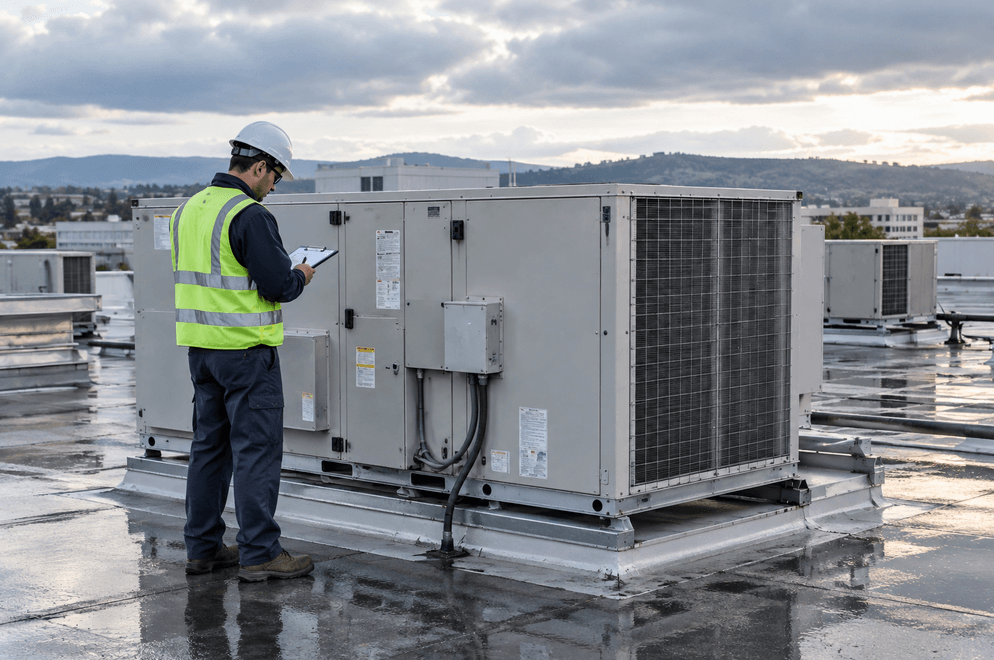
Rooftop HVAC equipment is common on office buildings, retail centers, mixed-use properties, and other commercial buildings throughout the Bay Area. Because these systems remain exposed to the elements throughout the year, the beginning of the rainy season is a logical time for a visual inspection.
Look for:
- Loose or damaged access panels
- Deteriorated seals or gasketing
- Visible corrosion or cabinet damage
- Missing or loose fasteners
- Damage around equipment curbs
- Evidence that water has entered the equipment
A rooftop unit may appear to operate normally during dry weather even when exterior components have begun to deteriorate. This is one reason commercial HVAC systems can develop problems between scheduled maintenance visits. Sustained or wind-driven rain can expose openings that were previously not causing noticeable problems.
Property managers do not need to remove panels or open equipment compartments as part of this check. The purpose is to identify visible conditions that warrant a closer inspection by an HVAC professional.
For properties with a preventative maintenance program, this seasonal visual review can complement scheduled equipment inspections.
Check Drainage Around HVAC Equipment
Water needs a clear path away from rooftop equipment. While roof drainage itself is generally a roofing or building-maintenance responsibility, drainage conditions near HVAC equipment can affect the equipment and the surrounding penetrations.
Before the rainy season, look at the areas surrounding rooftop units and other exterior HVAC equipment.
Watch for:
- Leaves or debris collecting near equipment
- Blocked drainage paths
- Standing water around HVAC curbs
- Areas where water appears to collect rather than drain
- Evidence of previous ponding or staining
A small amount of debris during dry weather can become more significant once steady rain begins.
HVAC equipment also has its own drainage system. Condensate drain lines and drain pans remove moisture created during normal system operation. These are separate from roof drains, but problems with either type of drainage can result in unwanted moisture around HVAC equipment.
If water is accumulating near a unit, determining where it originates is more important than assuming the HVAC system itself is responsible.
Look for Water Intrusion Around Ductwork and Penetrations
Commercial HVAC systems often require openings through the roof or exterior portions of a building. Equipment curbs, duct transitions, piping, conduit, and other components create areas where different building systems meet.
As those materials age, heavy rain may reveal a weakness that was not noticeable during the dry season.
Potential warning signs include:
- Water stains on ceilings or walls
- Damp areas near HVAC locations
- Moisture around exposed ductwork
- Musty odors that appear after rain
- Dripping or staining near vents or ceiling penetrations
- Leaks that consistently appear during storms
The location of a leak does not necessarily identify its source. Water can travel before becoming visible inside a building, and a leak near an HVAC unit may originate from roofing, flashing, sealants, duct connections, or another nearby component.
Property managers should document where and when moisture appears. If HVAC equipment or damaged ductwork may be involved, an HVAC contractor can evaluate those components while roofing or building-envelope issues are directed to the appropriate trade.
Pay Attention to Electrical and Control Problems During Rain
Commercial HVAC equipment located outdoors is designed for exterior conditions. Even so, damaged enclosures, deteriorated conduit, compromised wiring, or aging seals can create problems once equipment is exposed to sustained moisture.
Rather than attempting to inspect internal electrical components, property managers should pay attention to changes in how the equipment operates.
Signs worth investigating include:
- Equipment shutting down during or shortly after rain
- Breakers or equipment repeatedly tripping
- Intermittent operation
- Controls that behave differently during wet weather
- Visible damage to exterior electrical enclosures or conduit
- A unit that requires repeated resets
An intermittent problem can be difficult to diagnose after conditions dry out. Keeping basic records can help. Note which unit was affected, when the problem occurred, whether heavy rain was underway, and which areas of the property lost heating or cooling.
Repeated shutdowns and other HVAC warning signs should be investigated rather than treated as a normal consequence of bad weather.
Confirm Heating Systems Are Ready for Cooler Weather
Rain is only one part of the transition into a Bay Area winter. Heating equipment will also begin operating more frequently after relatively little use during the warmer months.
Early fall provides an opportunity to identify operational problems before tenants, employees, or customers are relying on the system regularly.
During initial heating operation, watch for:
- Delayed startup
- Unusual noises
- Weak airflow
- Uneven temperatures
- Frequent cycling
- Thermostat or control problems
- Areas that fail to reach the expected temperature
These problems can be especially important in multi-tenant commercial properties and apartment communities, where an issue may affect only one suite, floor, building, or zone.
Bay Area properties do not require the extensive cold-weather preparation necessary in regions with severe winters. The objective is simply to confirm that heating equipment works properly before cooler and wetter weather increases demand.
Know What Property Staff Can Check and What Requires a Contractor
Most of the useful checks described above are observational. Property managers and maintenance personnel can identify visible deterioration, standing water, staining, unusual sounds, inconsistent temperatures, and changes in equipment operation.
Some conditions require professional diagnosis.
An HVAC contractor should evaluate issues involving:
- Water inside HVAC equipment
- Repeated equipment shutdowns
- Electrical or control problems
- Failed HVAC condensate drainage
- Damaged or leaking ductwork
- Heating equipment malfunctions
- Unexplained airflow or temperature problems
- Equipment that operates differently during wet weather
Not every problem found near an HVAC system will ultimately be an HVAC problem. An inspection may determine that a roofing contractor, electrician, or another building professional needs to address the underlying condition.
Finding that out before prolonged rain begins is still useful.
A Short Pre-Rain HVAC Checklist
For property managers conducting a fall property walk, the HVAC portion can remain straightforward:
- Visually inspect rooftop and exterior HVAC equipment.
- Look for damaged panels, seals, or obvious deterioration.
- Check for debris and standing water around units.
- Note signs of moisture near ductwork and HVAC penetrations.
- Pay attention to equipment that behaves differently during rain.
- Test heating operation before regular winter use.
- Document unusual conditions so they can be evaluated if necessary.
The objective is not to diagnose every condition during the inspection. It is to catch obvious concerns early.
Address HVAC Concerns Before Sustained Rain Arrives
Heavy rain can expose problems that remain unnoticed during the Bay Area’s long dry season. A loose panel, deteriorated seal, drainage issue, or intermittent equipment problem is generally easier to investigate before weeks of wet weather make access and diagnosis more difficult.
A fall inspection gives commercial and multi-family property managers an opportunity to identify those concerns while there is still time to address them.
Aquinas HVAC provides commercial and multi-family HVAC service throughout the Bay Area from its Santa Clara office. If an inspection identifies an HVAC-related problem, it can be evaluated before winter rain becomes more consistent.