
Commercial HVAC Installation in San Diego: What Property Managers Should Consider Before a Project
Once a commercial HVAC system has reached the point where repair is no longer the best long-term option, the next decision is not simply which unit will replace it.A successful installation requires evaluating how the new equipment will work with the building, its existing infrastructure, its occupants, and the conditions in which the system will operate.
For San Diego property managers, those considerations can vary considerably from one property to another. An office building in Kearny Mesa may present different installation challenges than a multifamily property in Carlsbad or a commercial building in El Cajon.
Before a commercial HVAC installation in San Diego moves forward, understanding these variables can help property managers plan the project and avoid treating equipment replacement as a simple one-for-one exchange.
Start With the Building, Not Just the Existing HVAC Equipment
Replacing an existing HVAC unit with equipment of similar capacity may seem like the obvious starting point, but buildings do not necessarily operate under the same conditions they did when their original systems were installed.
Occupancy can change. Tenants may use spaces differently. Interior renovations can alter layouts, airflow, and cooling requirements. Building additions or equipment installed by tenants can also affect heating and cooling loads.
Before selecting replacement equipment, the current building conditions should be evaluated. That can include the space being served, occupancy, existing ductwork, electrical requirements, ventilation, controls, and how the property is currently being used.
For property managers, this is an important distinction. The goal of an HVAC installation is not simply to replace aging equipment. It is to install equipment that is appropriate for the building as it exists today.
Match the New System to Current Operating Requirements
Equipment capacity is only one part of system selection. A commercial HVAC installation must also account for the property’s existing infrastructure and operating requirements.
Depending on the building, installation planning may involve evaluating:
- Heating and cooling requirements
- Existing ductwork and airflow
- Electrical service
- Controls and thermostats
- Ventilation requirements
- Equipment location and available space
- Building operating hours
- Expected occupancy
Both oversized and undersized equipment can create performance issues. Proper planning helps determine what the building actually requires instead of assuming the specifications of the old equipment should simply be duplicated.
This is particularly important when a property’s use has changed over time. A space designed for one type of tenant may place different demands on its HVAC system after a renovation or change in occupancy.
Aquinas HVAC provides HVAC design and installation for commercial and multifamily properties, including offices, apartments, mixed-use properties, retail centers, and other light-commercial facilities.
San Diego Location Can Be One Part of Installation Planning
The city where a building is located does not determine its HVAC system, but local site and climate conditions can be part of the overall evaluation.
Properties closer to the coast, including areas such as Carlsbad and Encinitas, may have equipment exposed to coastal air. For outdoor HVAC equipment, that environment can make corrosion and equipment placement relevant considerations when planning for long-term operation.
Conditions can be different farther inland. Commercial properties in areas such as El Cajon, Santee, and Poway can experience greater cooling demand during hotter periods. Those conditions become part of the overall load and operating requirements considered when selecting equipment.
Location should not be treated as a substitute for evaluating the individual building. Two properties in the same city can have very different HVAC requirements based on their construction, exposure, occupancy, size, and use.
Aquinas serves commercial and multifamily properties throughout these San Diego County service areas.
Existing Ductwork and Controls Are Part of the System
New HVAC equipment does not operate independently of the rest of the building.
Existing ductwork must be capable of distributing conditioned air effectively. If airflow restrictions, damaged ductwork, poor distribution, or other issues already exist, replacing the HVAC unit alone may not resolve the property’s comfort or performance problems.
Controls also need to be considered. A commercial building may have thermostats, zoning, or other control components that need to work properly with the new equipment.
Electrical requirements are another part of installation planning. New equipment must be compatible with the electrical infrastructure serving the system, and existing components should be evaluated as part of the project.
The objective is to look at the HVAC system as a whole rather than treating the equipment as an isolated component.
Access and Installation Logistics Matter on Commercial Properties
Commercial HVAC installation also involves practical issues that may have little to do with equipment specifications.
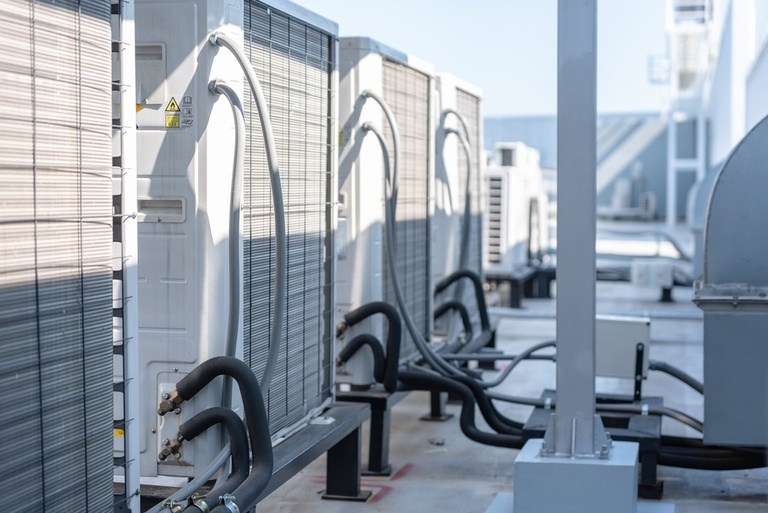
Many systems are located on rooftops or in areas where removing old equipment and placing new equipment requires advance planning. Depending on the property and equipment location, access may involve lifting equipment, staging areas, parking or loading-area restrictions, or coordination with other activity at the site.
These considerations can be particularly important at occupied commercial and multifamily properties.
An installation in a retail center may need to account for customer and tenant activity. An office property may have operating hours that affect when portions of the HVAC system can be taken offline. At a multifamily property, work may need to be organized to reduce disruption to residents.
Planning these issues before installation begins can help reduce unnecessary interference with normal property operations.
Aquinas specifically serves property managers, commercial property owners, facility managers, apartment operators, and other organizations responsible for commercial and multifamily properties.
Plan for the Building to Remain Operational
Unlike many residential installations, commercial and multifamily HVAC projects often take place while the property continues to operate.
That means property managers may need to consider which areas will be affected, when equipment can be shut down, how access will be provided, and whether work should be coordinated around occupants.
Properties in commercial areas such as Kearny Mesa, Mission Valley, Mira Mesa, and Sorrento Valley may have offices, retail operations, mixed-use buildings, or other occupied spaces where downtime needs to be considered during project planning.
The same principle applies to multifamily HVAC installation in San Diego. Installation planning should account for the people using the property as well as the mechanical requirements of the system.
Minimizing disruption during HVAC work is specifically identified as a priority for Aquinas’s commercial and multifamily services.
Installation Is Not Complete Until the System Is Operating Properly
Once new equipment is installed, the system must be started and checked for proper operation.
Standard commercial HVAC installation practices can include confirming equipment operation, checking controls, verifying airflow and temperatures, and making sure the new equipment is functioning as intended with the rest of the HVAC system.
This final stage matters because an HVAC installation is more than placing new equipment on a building. The objective is a functioning system that can meet the property’s requirements and operate as part of the existing building infrastructure.
Planning a Commercial HVAC Installation in San Diego
A commercial HVAC installation in San Diego should begin with an evaluation of the property rather than simply the equipment being replaced. Building use, system requirements, existing infrastructure, access, occupants, and site conditions can all affect the project.
For property managers, addressing those issues before installation provides a clearer picture of what the project will involve and what the new system needs to accomplish.
Aquinas HVAC provides commercial HVAC services and multifamily HVAC installation services throughout San Diego. Property managers considering a new HVAC installation can contact Aquinas to discuss the requirements of their property.