Preventing Mid-Season Commercial HVAC Failures in San Diego
Mid-season HVAC failures are one of the most disruptive issues commercial and multi-family property owners face in San Diego. Systems that appeared stable at the start of the cooling or heating season can break down unexpectedly when demand peaks. These failures are especially frustrating when routine maintenance has already been completed.
The issue is not that maintenance “failed.” The issue is understanding what maintenance is designed to do. Commercial HVAC maintenance reduces risk. It does not eliminate it. Recognizing why systems still fail mid-season allows property managers to plan more effectively and set realistic expectations across San Diego commercial HVAC environments.
This article focuses on why commercial HVAC systems fail during peak operating periods in San Diego and how targeted maintenance helps reduce exposure to those failures.
Why Mid-Season Failures Still Occur After Maintenance
Commercial HVAC systems in San Diego operate under challenging conditions. Coastal humidity, inland heat swings, long operating hours, and variable occupancy all increase system stress. Even well-maintained equipment experiences wear that may not become visible until the system is pushed hard.
Mid-season failures are usually the result of cumulative stress rather than missed service. Components that appear stable during mild conditions can fail once temperatures rise, runtimes extend, and airflow demands increase across the building.
Maintenance identifies known risks. It cannot predict every failure.
Load Increases Expose Hidden Weaknesses
During shoulder seasons, HVAC systems often operate under light or intermittent load. Once peak season begins, longer runtimes and higher demand expose weaknesses that were previously manageable.
Common examples include:
- Electrical: Slightly loose electrical connections can overheat under continuous load and fail without warning.
- Drainage: Condensation lines that handled low moisture volumes can back up when humidity increases.
- Refrigerant: Higher operating pressures expose early-stage leaks in worn lines or fittings.
These failures are typically not caused by skipped maintenance. They occur when systems reach operational limits.
Airflow Restrictions Amplify System Stress
Airflow problems are a frequent contributor to mid-season failures. Even minor restrictions increase strain on the system and reduce efficiency.
Changing air filters supports airflow and indoor air quality, but airflow challenges rarely stop there. Coil buildup, zoning imbalances, and extended run times all interact once cooling demand peaks.
Restricted airflow forces systems to run longer to meet temperature setpoints, accelerating wear on motors, compressors, and electrical components.
Moisture Management Under Peak Conditions
San Diego’s climate creates significant condensate during cooling season, particularly in coastal and mixed-use areas. Drain pans and condensation lines that function early in the season may struggle once humidity and runtime increase.
Adding algae tablets to drain pans and blowing out condensation drain lines with nitrogen helps reduce clog risk. However, biological growth and debris accumulation continue throughout the season.
Mid-season drainage failures often develop gradually and only become apparent when moisture production increases. When they occur, systems may shut down or cause water damage with little warning.
Component Stress Under Peak Load
Certain failures tend to emerge only when systems operate continuously.
Tightening electrical connections during maintenance reduces failure risk, but thermal expansion during extended runtimes can still cause components to loosen or fail later. Electrical failures often appear sudden, even though they develop over time.
Similarly, inspecting refrigerant lines for wear or damage identifies visible risk areas, but rising pressures during peak cooling can expose weaknesses that were not leaking earlier in the season.
Maintenance lowers probability. It does not eliminate component stress. When systems show early warning signs under peak conditions, proactive commercial HVAC service support helps address developing issues before they escalate into outages.
Equipment Leveling and Long-Term Reliability
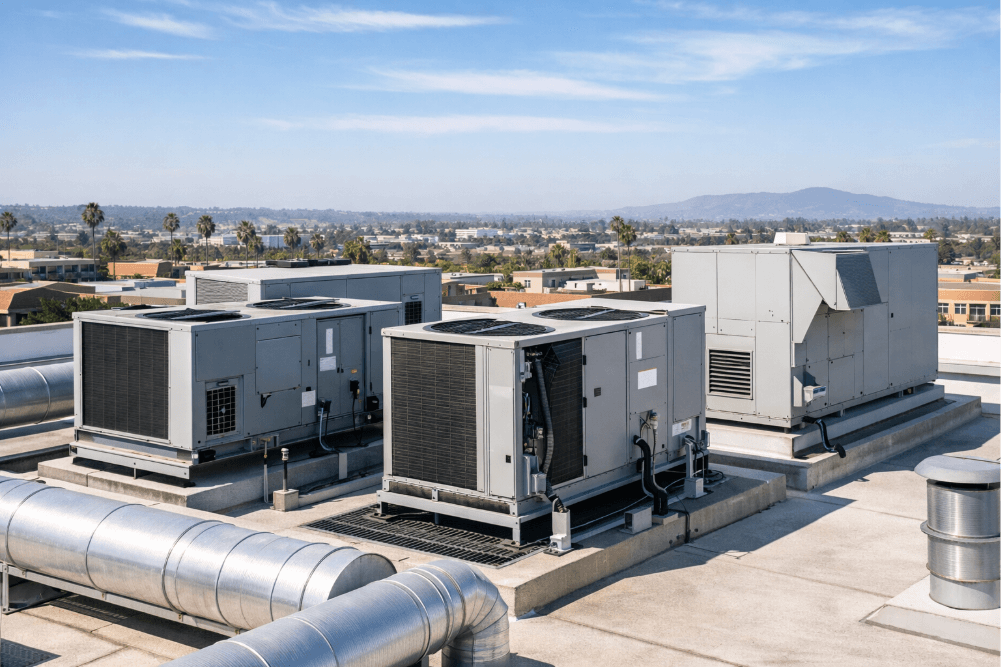
Verifying that AC units are level is a small step with long-term impact. Rooftop equipment can shift due to structural settling, weather exposure, or prior roof work.
Unlevel units affect oil return, drainage, and mechanical balance. These issues rarely cause immediate shutdowns, but they contribute to accelerated wear that becomes evident during peak operation.
Many mid-season compressor and drainage failures trace back to long-term alignment issues rather than a single missed service item.
Maintenance as Risk Reduction, Not a Guarantee
Commercial HVAC maintenance is sometimes misunderstood as a guarantee against breakdowns. In reality, maintenance is a structured risk-reduction strategy.
It improves system stability, extends equipment life, and reduces the likelihood of disruptive failures. It does not prevent every issue, especially in aging systems or buildings with heavy usage patterns.
For commercial and multi-family properties, the value of maintenance lies in fewer failures, faster diagnosis, and reduced operational impact when issues arise.
This risk-reduction approach is the foundation of structured commercial HVAC maintenance programs, where the goal is stability, visibility, and fewer disruptive failures—not perfection.
Smarter HVAC Maintenance Scheduling in San Diego
Effective HVAC maintenance scheduling in San Diego considers more than calendar dates. It accounts for building type, system age, occupancy patterns, and seasonal demand changes.
Office buildings often experience different stress profiles than apartment communities. Mixed-use properties add complexity through varied load patterns across zones and timeframes.
Aligning maintenance with how a building actually operates improves outcomes more than increasing service frequency alone.
Supporting Commercial and Multi-Family Properties
Effective commercial HVAC maintenance strategies in San Diego should reflect how buildings are actually used. Office buildings, retail centers, and multi-family communities place different demands on HVAC systems.
In office buildings, HVAC system stability supports tenant productivity and day-to-day operational continuity. For multi-family HVAC properties, reliability directly affects resident comfort, retention, and operational consistency across shared systems.
Maintenance programs that account for these differences provide more meaningful risk reduction than one-size-fits-all approaches.
Planning for Stability, Not Perfection
Preventing every HVAC failure is not realistic. Planning for stability is.
Maintenance focused on airflow, electrical integrity, moisture control, refrigerant condition, and equipment alignment reduces exposure to the most common mid-season failures. It also provides clearer insight into system condition as demand increases.
For San Diego property owners, this approach supports predictable operations, fewer emergencies, and better long-term system performance.
Reduce Mid-Season HVAC Risk Before Peak Demand Hits
If you manage a commercial or multi-family property in San Diego and want to reduce mid-season HVAC risk, request a maintenance evaluation or service support from Aquinas HVAC. A focused review can help identify system vulnerabilities before peak demand exposes them.