
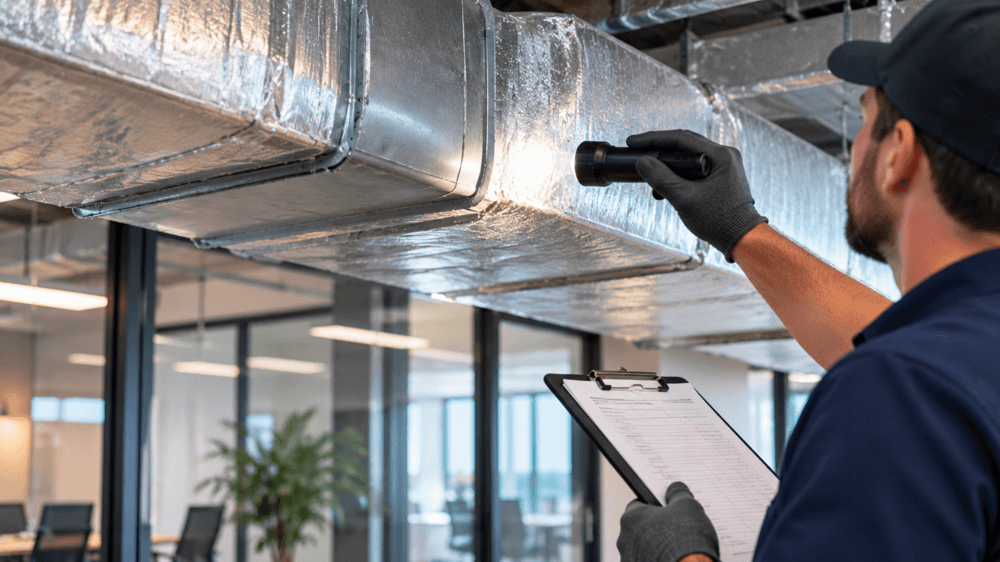
Why Commercial Ductwork Problems Surface After Tenant Move-In in Orange County
A commercial tenant improvement project may be completed and ready for occupancy, only for heating, cooling, or airflow complaints to develop once the new tenant begins operating.
In some cases, the HVAC equipment is working properly. The problem involves how conditioned air moves through the renovated space.
These situations can be particularly frustrating for commercial property managers. Construction is finished, the tenant has moved in, and correcting a concealed ductwork problem may require additional investigation or access above completed ceilings.
For property managers overseeing commercial buildings throughout Orange County, understanding why these problems emerge after occupancy can help identify the appropriate corrective action without unnecessary equipment repairs.
Why Ductwork Problems May Not Appear Until a Space Is Occupied
A renovated commercial space may appear to have adequate heating and cooling during initial equipment testing. However, actual operating conditions can reveal problems that were not apparent when the building was unoccupied.
Several factors contribute to this difference:
- Actual occupancy: Employees, customers, and equipment introduce heat loads that may not have been present during initial testing.
- Operating schedules: Extended hours or changing occupancy patterns can expose temperature inconsistencies.
- Enclosed spaces: Newly constructed offices, conference rooms, and other enclosed areas may have different airflow requirements.
- Seasonal conditions: Problems may become more apparent when outdoor temperatures increase heating or cooling demand.
These conditions do not necessarily indicate defective HVAC equipment. They may reveal limitations in the existing air distribution system or problems associated with modifications made during construction.
Distinguishing Ductwork Problems From Equipment Failures
When a tenant reports inadequate cooling or inconsistent temperatures, the initial assumption may be that the HVAC equipment needs service.
However, replacing components or repeatedly adjusting thermostats will not resolve a problem caused by damaged ductwork or improper air distribution.
Consider a renovated office where several enclosed rooms remain warmer than adjacent spaces. The rooftop HVAC unit may be delivering conditioned air at the expected temperature, but certain rooms may receive insufficient airflow.
Possible causes include disconnected duct sections, restricted supply branches, improperly adjusted dampers, or inadequate return-air pathways.
The distinction matters because the appropriate solution depends on identifying where system performance is being affected.
A ductwork evaluation should consider whether the equipment is producing conditioned air, whether that air reaches the intended spaces, and whether the building’s current layout corresponds with the existing distribution system.
Common Problems Discovered After Commercial Renovations
Damaged or Disconnected Duct Connections
During tenant improvements, contractors frequently work above suspended ceilings where HVAC ducts share space with electrical, plumbing, and other building systems.
Duct connections can be disturbed during construction, and concealed damage may remain unnoticed until the system operates under normal demand.
Air leakage can reduce the volume of conditioned air reaching occupied spaces and contribute to recurring comfort complaints.
Improper Air Distribution
A duct system originally designed for an open commercial space may not distribute air effectively after the layout has been subdivided.
For example, an existing supply diffuser may serve one portion of a renovated office while an adjacent enclosed room receives insufficient airflow.
Correcting the problem may require relocating diffusers, adjusting duct branches, or modifying the air distribution configuration.
Zoning and Control Problems
Some commercial buildings use Variable Air Volume (VAV) systems or other zoning controls to regulate airflow and temperature.
After renovations, existing control zones may no longer correspond to the new room configurations.
A thermostat located in one office may control airflow serving several spaces with different occupancy patterns or heating and cooling requirements.
In these situations, ductwork modifications alone may not resolve the problem. Control settings and zoning arrangements may also require evaluation.
How Commercial HVAC Professionals Investigate Airflow Problems
A commercial ductwork evaluation should move beyond identifying uncomfortable rooms to determining why the intended airflow is not reaching those spaces.
Depending on the system and reported symptoms, diagnostic procedures may include:
- Airflow measurements: Measuring supply and return airflow can help identify differences between actual operating conditions and intended system performance.
- Static pressure testing: Pressure measurements can help identify restrictions or excessive resistance within the air distribution system.
- Testing, Adjusting, and Balancing (TAB): These procedures can verify airflow quantities and determine whether adjustments are needed to restore appropriate distribution.
- Control system evaluation: Reviewing dampers, thermostats, VAV terminal units, and control settings can help identify problems involving zoning or airflow regulation.
The appropriate testing depends on the building’s HVAC configuration and the nature of the complaints. Not every situation requires every procedure.
The objective is to identify the underlying problem before determining whether repairs, adjustments, or additional system modifications are justified.
When Airflow Problems Also Involve Ventilation
Post-renovation complaints are not always limited to heating and cooling.
Changes in occupancy, partitions, or room configurations may affect how outdoor ventilation air reaches occupied spaces.
A newly enclosed conference room, for example, may maintain a comfortable temperature while receiving inadequate ventilation for its actual occupancy.
This distinction is important because thermal comfort does not establish that a building satisfies applicable ventilation requirements.
California’s Title 24 requirements and applicable mechanical codes may affect how ventilation systems are modified or evaluated during commercial alterations.
If post-occupancy problems suggest inadequate ventilation, the evaluation should consider outdoor air delivery and applicable code requirements in addition to temperature control.
Where corrective modifications are necessary, property managers should also determine whether permitting, mechanical acceptance testing, or other compliance procedures apply.
What Property Managers Should Document Before Requesting Service
When airflow problems appear after a tenant moves in, providing clear information about the conditions can help narrow the initial investigation.
Useful documentation includes:
- Which rooms or tenant spaces are affected.
- Whether the problem occurs during particular hours or operating conditions.
- When the complaints began relative to the completed renovation.
- Whether ductwork, diffusers, thermostats, or partitions were modified.
- Any available mechanical drawings, balancing reports, or records of previous HVAC work.
It is also useful to determine whether the complaints involve one isolated space or multiple areas served by the same HVAC equipment.
These details can help distinguish a localized distribution problem from a broader equipment or control issue.
Correcting Ductwork Problems in Occupied Commercial Buildings
Once a renovated space is occupied, corrective work may require additional coordination.
Accessing concealed ductwork can involve removing ceiling panels or working around finished interiors. Repairs may also need to be scheduled to minimize disruption to tenant operations.
Depending on the findings, corrective work might include sealing damaged connections, replacing affected duct sections, adjusting airflow, relocating diffusers, or modifying controls.
The scope should reflect the diagnosed problem rather than assuming that extensive ductwork replacement is necessary.
For property managers preparing future renovations, our article on HVAC Planning for Tenant Improvements in Orange County Commercial Properties explains how evaluating existing systems before construction can help reduce these complications.
Commercial Ductwork Services Throughout Orange County
Problems discovered after tenant occupancy can involve ductwork, HVAC equipment, controls, or a combination of conditions. Identifying the cause is essential to determining the appropriate repair.
Aquinas HVAC provides commercial ductwork services and HVAC solutions for commercial and multi-family properties throughout Orange County.
From its Santa Ana location, Aquinas serves properties in Irvine, Anaheim, Costa Mesa, Fullerton, Tustin, and surrounding communities.
If your commercial property is experiencing airflow or temperature problems following a renovation, contact Aquinas HVAC to discuss the symptoms and determine whether a professional HVAC evaluation is appropriate.