
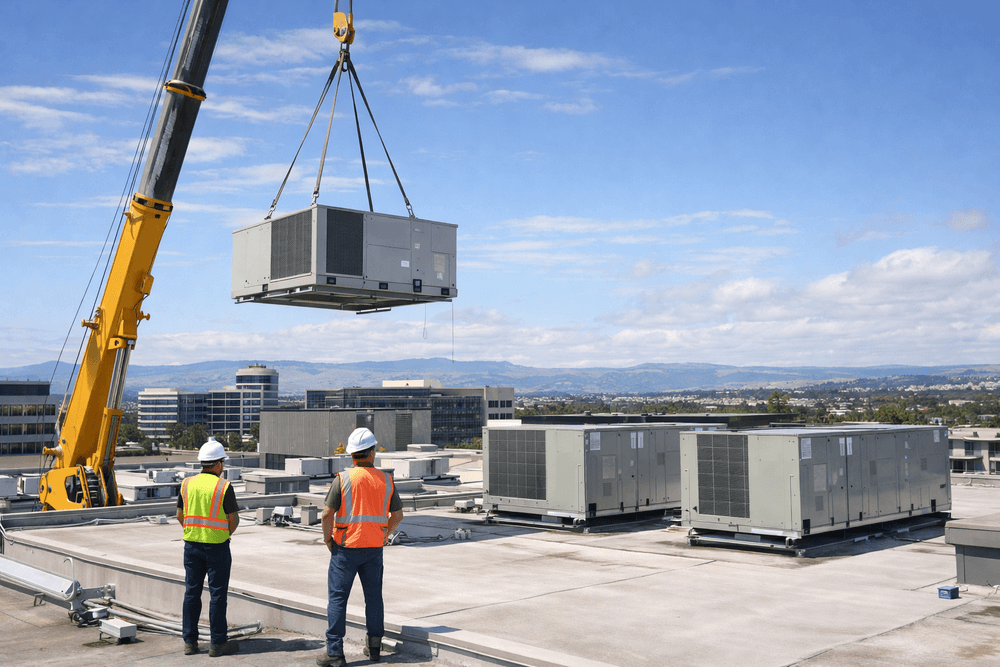
When Commercial HVAC Systems Should Be Replaced in San Jose Buildings
Commercial HVAC systems are built to operate for many years, but no system lasts indefinitely. Across San Jose and the greater Bay Area, many office buildings, retail centers, and multi-family properties are now operating equipment that is approaching or exceeding its expected service life.
For property owners and facility managers, the question is rarely whether replacement will eventually occur. The more important question is when the system has reached a point where replacement becomes the more reliable and financially responsible option.
Understanding the warning signs of aging equipment and planning upgrades carefully allows building operators to maintain stable conditions for tenants while protecting long-term building performance.
For many Bay Area properties, proactive commercial HVAC system replacement in San Jose becomes necessary once reliability, efficiency, and tenant comfort begin to decline.
The Typical Lifecycle of Commercial HVAC Systems
Commercial HVAC equipment is designed for long operational cycles, but most systems have a practical service life of approximately 15 to 20 years depending on system type, operating conditions, and maintenance history.
In the San Jose region, systems often run year-round due to the combination of warm summers, mild winters, and high building occupancy levels. This extended operating schedule places additional strain on equipment components.
Over time, compressors, motors, coils, and electrical components begin to degrade. Even well-maintained systems eventually lose efficiency and reliability.
Common commercial systems reaching end-of-life in Bay Area properties include:
- Rooftop packaged units
- Split commercial air conditioning systems
- Multi-zone systems serving office suites
- HVAC systems supporting mixed-use or light-commercial buildings
- Older systems installed before modern efficiency standards
Once equipment approaches the end of its lifecycle, replacement planning becomes an important part of building operations.
Warning Signs a Commercial HVAC System May Need Replacement
Commercial systems rarely fail without warning. Most aging equipment begins to show operational symptoms long before a full breakdown occurs.
Property managers in San Jose often begin exploring commercial HVAC replacement after noticing patterns such as rising repair frequency or declining system performance.
Frequent Breakdowns and Emergency Repairs
One of the most common indicators of end-of-life equipment is a rising number of service calls.
Older systems may begin experiencing:
- Compressor failures
- Electrical control issues
- Refrigerant leaks
- Fan motor problems
- Repeated startup failures
While individual repairs may resolve short-term issues, frequent failures often indicate deeper mechanical wear. In these situations, ongoing repair costs can begin to approach the cost of system replacement.
Declining Energy Efficiency
Older HVAC systems typically consume more energy as components degrade.
Coils accumulate wear, compressors lose efficiency, and airflow performance declines over time. As a result, the building’s energy consumption may gradually increase even though occupancy levels remain unchanged.
For commercial buildings in San Jose where energy costs are a significant operating expense, declining efficiency often becomes a key factor when evaluating commercial HVAC system upgrades and long-term building performance
Tenant Comfort Complaints
Comfort issues are often the first visible symptom for building occupants.
Common complaints in aging systems include:
- Uneven temperatures between suites
- Difficulty maintaining consistent cooling during peak hours
- Excessive humidity or stale air
- Long system recovery times after temperature adjustments
These problems are especially common in office buildings and multi-tenant properties where HVAC systems must respond to varying occupancy loads throughout the day.
Difficulty Obtaining Replacement Parts
As commercial equipment ages, manufacturers may discontinue certain components.
This can lead to extended downtime when repairs are needed, particularly if parts must be sourced from third-party suppliers or refurbished inventories.
When replacement parts become difficult to obtain, system replacement often becomes the more practical long-term solution.
Planning HVAC System Replacement in Operating Buildings
Replacing a commercial HVAC system is rarely a simple equipment swap. In occupied buildings, upgrades must be carefully planned to avoid disruptions to tenants and daily operations.
For office buildings, retail centers, and multi-family properties across San Jose, the planning process typically includes several stages.
System Evaluation
The first step is evaluating the existing HVAC system to determine the scope of replacement.
This process typically includes:
- Reviewing equipment age and service history
- Inspecting mechanical components
- Evaluating airflow distribution and duct performance
- Assessing electrical infrastructure
- Identifying system capacity relative to building demand
This assessment helps determine whether full replacement or partial upgrades are appropriate.
System Design and Equipment Selection
Once replacement is confirmed, selecting the right system configuration becomes critical.
Modern HVAC systems offer significant improvements in efficiency and performance compared with equipment installed two decades ago. Upgrades may include:
- High-efficiency rooftop units
- Variable speed compressors
- Improved zoning capabilities
- Updated building control systems
- Low-GWP refrigerants compliant with current regulations
Selecting equipment that matches the building’s load requirements ensures stable long-term performance.
Scheduling Installation Around Building Operations
Commercial HVAC installation projects must often occur while the building remains fully operational.
In many cases, installation plans are structured around:
- Off-hours installation windows
- Phased equipment replacement
- Temporary cooling solutions when required
- Coordination with property management teams
Careful scheduling helps ensure tenants experience minimal disruption during the upgrade process.
Benefits of Replacing Aging HVAC Systems
Although replacement represents a significant capital investment, modern HVAC systems provide measurable operational benefits for commercial buildings.
Improved Reliability
New systems dramatically reduce the risk of unexpected breakdowns.
For property managers responsible for tenant comfort, improved reliability helps eliminate emergency service disruptions and allows maintenance planning to become more predictable.
Higher Energy Efficiency
Modern commercial HVAC equipment is significantly more efficient than systems installed 15 to 20 years ago.
Newer systems often include:
- High-efficiency compressors
- Variable speed fans
- Advanced control systems
- Improved heat transfer components
These improvements can reduce energy consumption while maintaining more consistent indoor conditions.
Better Temperature Control
Modern systems provide more responsive temperature control and improved airflow management.
For office buildings and retail environments, this can help stabilize indoor comfort conditions throughout the day, even as occupancy levels fluctuate.
Long-Term Building Performance
For commercial properties across the Bay Area, HVAC upgrades often contribute to long-term building value.
Reliable climate control systems support tenant retention, reduce maintenance disruptions, and allow building owners to operate properties more efficiently.
Commercial HVAC Replacement for San Jose Buildings
Across San Jose and surrounding Bay Area communities, many commercial properties were constructed decades ago. As these buildings age, HVAC systems installed during earlier development cycles are reaching the end of their usable life.
For office buildings, retail centers, and light-commercial properties throughout the Bay Area, evaluating HVAC replacement early allows building owners to avoid unexpected failures while planning upgrades strategically.
Working with experienced commercial HVAC contractors in San Jose helps ensure replacement projects are properly assessed, designed, and implemented.
A structured approach to commercial HVAC system replacement in San Jose allows property owners to improve building performance while maintaining operational continuity for tenants.
Schedule a Commercial HVAC Replacement Consultation
If your building’s HVAC system is showing signs of age or declining reliability, it may be time to evaluate replacement options.
Aquinas HVAC works with property managers, facility teams, and building owners across San Jose and the Bay Area to evaluate aging systems, plan replacements, and install modern commercial HVAC equipment.
To discuss commercial HVAC replacement for your San Jose property, contact Aquinas HVAC to schedule a consultation and system evaluation.