
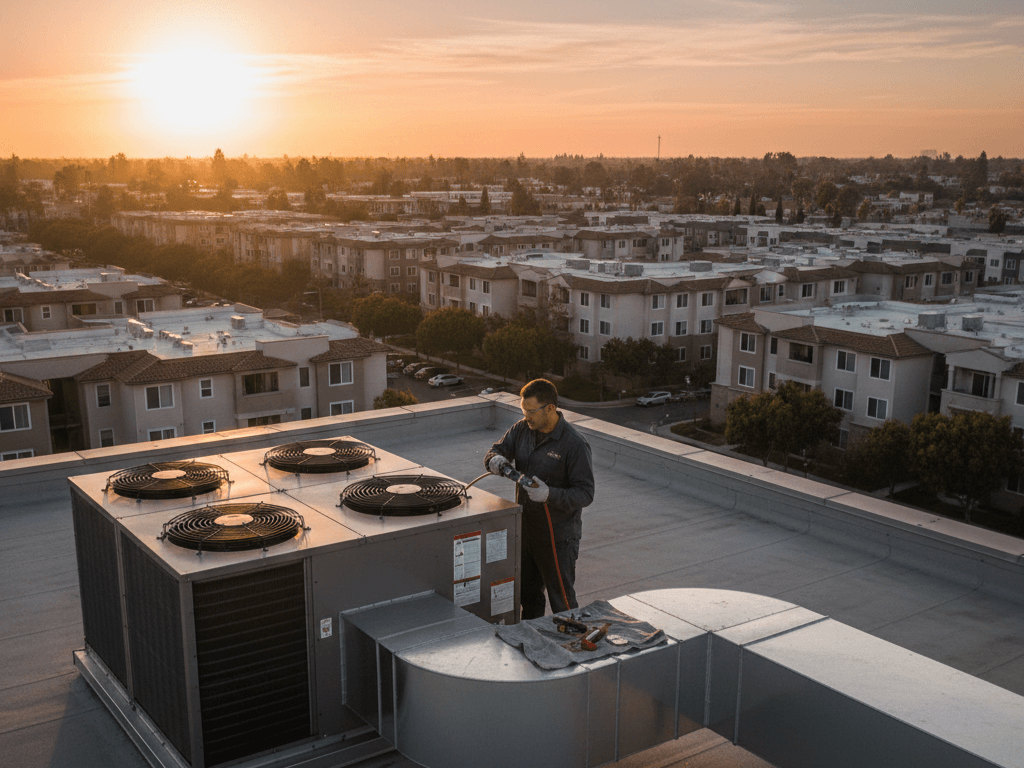
Apartment Complex HVAC Maintenance in Orange County: A Planning-Focused Guide
Apartment complex HVAC maintenance in Orange County is a continuous operational responsibility, not a periodic task. Multi-family buildings rely on HVAC systems that serve many residents at once, operate under constant load, and influence both tenant satisfaction and long-term asset performance.
When HVAC maintenance is approached with planning in mind, property managers gain clarity. They understand how systems are performing today, where risks are developing, and how to plan responsibly for future repairs or replacements. Preventative HVAC maintenance supports this planning process by providing consistent, measurable insight into system condition across apartment and multi-family properties throughout our Orange County HVAC service area.
Why HVAC Maintenance Plays a Larger Role in Apartment Complexes
HVAC systems in apartment buildings operate differently than those in single-tenant or small commercial properties. Equipment is often shared, rooftop access is limited, and a single failure can affect multiple units simultaneously.
Without consistent maintenance, apartment complexes frequently experience the following operational challenges:
- Temperature imbalances between units or floors
- Higher energy usage caused by airflow restrictions or system strain
- Drainage and moisture issues that escalate into interior damage
- Repeated service calls for the same underlying problems
- Accelerated wear on major HVAC components
In Orange County, where cooling and heating demands exist throughout the year, deferred HVAC maintenance rarely stays hidden. Issues tend to surface during peak usage periods, often requiring urgent attention that disrupts residents and strains operating budgets.
Preventative HVAC Maintenance as a System Evaluation Process
Preventative HVAC maintenance programs are most effective when they are treated as a system evaluation process rather than a collection of isolated tasks. Each maintenance visit provides an opportunity to verify that equipment is operating within expected parameters and to document system condition over time.
For multi-family properties, this evaluation-based approach allows property managers to:
- Establish consistent performance benchmarks
- Identify trends across multiple buildings or rooftops
- Compare newer and older systems objectively
- Reduce reliance on emergency diagnostics
When technical observations are reviewed collectively, preventative maintenance becomes a planning tool. Patterns emerge, risks are identified earlier, and decision-making becomes more predictable and data-driven.
Core HVAC Maintenance Tasks for Apartment Buildings
Preventative HVAC maintenance tasks form the technical foundation for evaluating HVAC system condition in apartment complexes. When performed consistently, these tasks confirm proper operation, highlight developing issues, and support reliable system performance.
Typical apartment HVAC maintenance activities include:
- Air Filter Replacement: Maintaining clean filters supports proper airflow and reduces strain on blowers and motors.
- Operational Testing: Verifying both heating and cooling modes confirms that systems can respond as needed throughout the year.
- Evaporator Coil Inspections: Clean, intact coils allow for efficient heat transfer and help prevent capacity loss.
- Drain Pan Treatment: Adding algae tablets reduces biological buildup that can lead to clogs and water damage.
- Condensation Line Clearing: Using nitrogen to clear drain lines helps prevent blockages and overflow conditions.
- Electrical Connection Checks: Tightening electrical connections reduces the risk of component failure and intermittent operation.
- Refrigerant Line Inspections: Reviewing refrigerant lines for wear, damage, or insulation issues supports consistent system performance.
- Unit Level Verification: Ensuring equipment is level promotes proper drainage and long-term mechanical reliability.
Together, these tasks provide a clear snapshot of system health and help identify risks before they escalate into service interruptions.
Using Maintenance Data for Operational and Asset Planning
For property managers and owners, HVAC maintenance findings inform both daily operations and long-term financial strategy. Consistent evaluations allow stakeholders to move beyond reactive scheduling toward predictable planning.
Over time, documented maintenance evaluations help identify:
- Systems Approaching End-of-Life: Providing a factual basis for capital improvement and replacement planning.
- Underperforming Equipment: Highlighting units that generate frequent service calls or higher operating costs.
- Recurring Design-Related Issues: Identifying airflow or drainage limitations tied to building layout or system configuration.
- Improved Budget Accuracy: Reducing surprise failures through proactive part replacement and prioritized repairs.
This level of operational visibility is especially important for managers overseeing portfolios with varying building ages, equipment types, and construction phases.
Multi-Family and Commercial HVAC Overlap
Many apartment complexes share operational characteristics with light-commercial buildings. Shared corridors, common areas, leasing offices, and mixed-use layouts introduce HVAC considerations that extend beyond individual dwelling units.
Experience supporting multi-family HVAC services allows providers to evaluate shared infrastructure, load distribution, and airflow balance between common and private spaces. This crossover perspective is particularly valuable for Orange County properties that include retail or office space alongside residential units.
Local Experience in Orange County Matters
Apartment buildings across Orange County vary widely in construction era, system design, and environmental exposure. Coastal properties face different operating conditions than inland developments, and HVAC configurations often reflect the standards in place at the time of construction.
Aquinas HVAC works with apartment and multi-family properties throughout Orange County, dispatched from our Santa Ana location to ensure rapid response times, providing maintenance evaluations grounded in local building conditions and real operating demands.